
Build a Twin Falls Previous Residents Timeline by Era
Choose the source by the period you need. Modern parcel and permit tools are good starting points, but the deepest Twin Falls address trail lies in recorded books, printed directories, census schedules, and newspapers. Coverage is uneven, so a blank year should send the search to a companion source rather than invite a guess.
| Source | Years it can cover | Where to use it | What it may show |
|---|---|---|---|
| County parcel popup | Current data; historical span not stated | Twin Falls County Parcel Map | Owner output, parcel ID, situs and mailing addresses, legal lines, deed references |
| County deed collection | Collection 1906–1988; deed indexes 1915–1974; deeds 1906–1941 | FamilySearch, then County Clerk confirmation | Grantor, grantee, instrument trail, book or image clues |
| City and regional directories | Selected runs from 1908–1933 and later years | Idaho State Historical Society, University of Idaho, Twin Falls Public Library | Dated names, addresses, telephone and household clues |
| Federal census | Public schedules under the 72-year release rule | National Archives and library research routes | Household members, relationships, and address context |
| Building permits | Recent dashboard tabs; older online start not established | Cityworks dashboard and monthly permit PDFs | Location, case, type, status, dates, and selected project fields |
| Newspapers and indexes | Local papers from 1904; digitized Twin Falls titles from 1905–1918 | Library microfilm, Chronicling America, state indexes | Obituaries, notices, names, clubs, estates, and address mentions |
Start with the parcel popup for a recent home. For an early townsite question, start with the legal description, directory reels, and newspaper. The Twin Falls previous residents trail is strongest when the sources overlap.
Begin Twin Falls Address History with the Parcel Popup
The Twin Falls County Parcel Map accepts a property address or parcel number. Select the right parcel and copy the parcel ID, owner output, situs address, mailing address, legal-description lines, and up to five deed-reference fields. Acreage and district fields can help distinguish similar parcels, while map position can link a modern lot to a historic block.
Do not treat the owner output as a list of current or previous residents. A titled owner may use a different mailing address, and occupants do not necessarily appear. The popup is a launch point because its legal and deed fields can identify the record you need from the Clerk / Auditor / Recorder.
Walk the Twin Falls County Deed Chain Backward
A chain of title links one conveyance to the prior one. Twin Falls County has no identified county-run public grantor-grantee web interface in the reviewed pages, so the practical route combines parcel clues, the historical FamilySearch collection, and a precise office request. Work backward slowly and verify that each deed describes the same land.
- Copy the present owner output, parcel ID, legal description, and deed references from the parcel popup.
- Request or locate the current purchase instrument, then record its grantor, grantee, date, instrument number, and legal description.
- Treat that seller as a grantee in the older index to locate the seller's purchase.
- Repeat the link, matching the legal description each time and noting name variants or partial-interest transfers.
- When the online historical collection ends, send the County Clerk a narrow request and ask whether the book, index, or certified copy is available.
- Grantor and grantee
- The grantor transfers an interest; the grantee receives it.
- Chain of title
- The linked sequence of instruments that carries an interest backward through time.
- Legal description
- The land description based on a lot, block, subdivision, survey, or other legal system, which is more stable than a street label.
A same-name match is not enough. Compare spouse names if present, dates, signatures, legal text, and the direction of the transfer. A mortgage, release, easement, or power of attorney may appear beside deeds but does not necessarily represent a sale.
Request a Twin Falls Purchase Deed When the Web Trail Ends
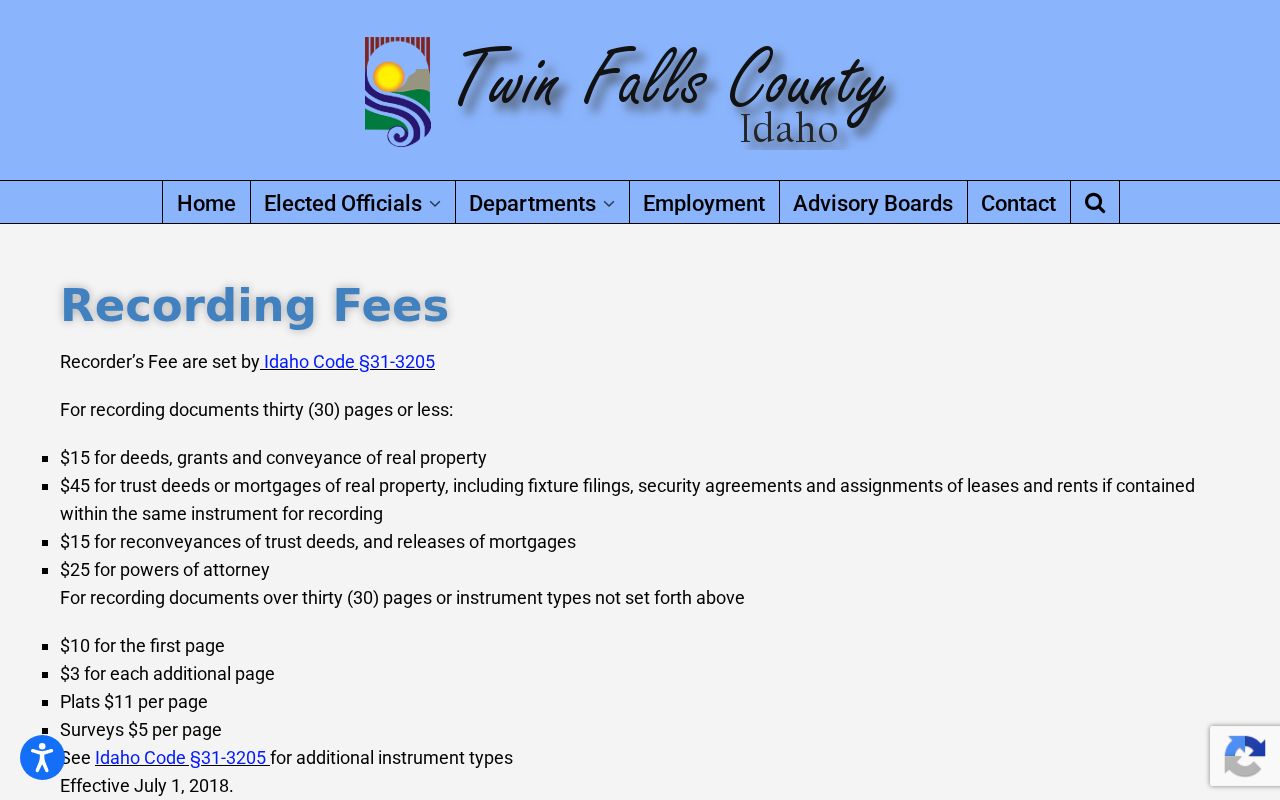
The County Clerk's public page and recording-fee page do not amount to a searchable current deed index. Use the county's public-records route for a plain or certified copy. The request must be completed, signed, dated, and served on the proper custodian. Include the address, parcel number, deed-reference field, legal description, likely date range, instrument type, and copy or certification choice.
The posted schedule, effective July 1, 2018, lists $15 to record a deed, grant, or conveyance up to 30 pages. It also lists separate instrument and page rules. Those are recording fees, not proof of a search fee or web coverage. Check the live page before paying and ask the office what applies to the copy sought.
This screenshot of the Twin Falls County Clerk fee page documents the official recorder route used for this research.
Use the 1908–1933 Twin Falls Directory Backbone
Idaho State Historical Society reels give past residents a strong early sequence. Reel 27 covers Twin Falls City and County in 1908–09, 1910, a multi-county 1914–15 volume, and Twin Falls County in 1916–17. Reel 28 continues with 1918–19 and 1920–21. Reel 29 includes 1923–24, 1925–26, 1928–29, 1930–31, and 1932–33.
The multi-county volumes require care. Check the Twin Falls city heading and the Twin Falls County portion, as well as nearby community headings when the trail crosses city lines. Transcribe the full entry, page, volume year, and abbreviation key. Do not smooth over a missing year. A newspaper, census, deed, or library reference search may fill the gap.
Later telephone and business directory runs at the University of Idaho extend selected years through 2005. The Twin Falls Public Library Idaho Room also identifies Polk's City Directory as a resource and can handle a research request for $5 per item. The collections themselves are detailed on the Twin Falls city directory page.
Reverse a 1970 Twin Falls Address to an Occupant
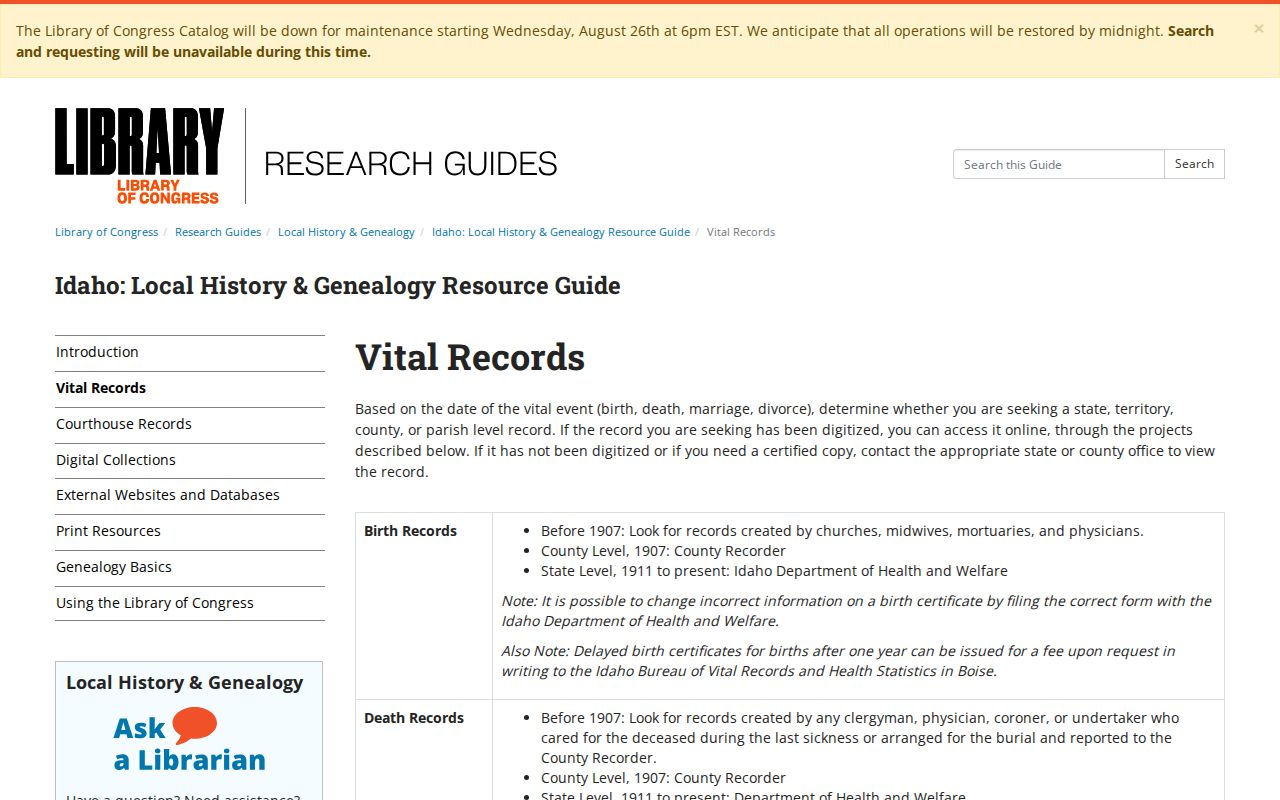
The Library of Congress guide identifies a 1970 Twin Falls criss-cross directory. Unlike a surname-first directory, a criss-cross volume lets the researcher begin with an old address. It can therefore test who lived here before even when the family name is unknown. Read adjacent numbers as context, but do not assume that a blank line means a vacant site.
Write down the printed street heading, house number, occupant text, telephone number if shown, publisher, year, page, and abbreviation key. Then compare that dated entry with the deed chain. Agreement can strengthen the timeline; disagreement may point to a renter, delayed publication, a mailing mismatch, or a title holder who lived elsewhere.
Pair Twin Falls Directories with Census Households
Directories provide a dated address clue, while census schedules may show the household around it. The NPS Original Townsite nomination demonstrates the pairing: it cites twenty boarding houses in a 1910 city directory, a census household at 443 Second Ave N, and 1916 directory entries at 312 and 344 Seventh Ave N. These examples show why an owner-only search misses boarders and other past residents.
- Transcribe a directory entry and note the exact publication year.
- Choose the nearest publicly released federal census year and find the household or enumeration context.
- Compare names, initials, relationships, address sequence, and nearby households.
- Check the next available directory to see whether the address or household changed.
- Use newspapers and deeds to explain moves, deaths, transfers, or gaps without assuming an answer.
Federal census access follows the 72-year rule. Keep the census citation and image details separate from the directory citation, since each was gathered at a different time for a different purpose.
Date Changes at a Twin Falls Address with Permits
The Cityworks Building Permit Dashboard can show a recent case number, location, permit type and subtype, status, and dates. Inspected tabs cover 2024, 2025, and 2026 plus a last-month view. Monthly PDFs may add owner, contractor, valuation, and fees. These records can explain when a remodel or other permitted project entered the city trail.
A permit is not a deed and does not prove that the named party lived at the site. Use it to date physical or administrative change, then compare the parcel record and title chain. No verified older online permit start was located, so earlier work may require a focused City Clerk or public-records request rather than an invented cutoff.
Bridge Twin Falls Old Blocks and New Parcels
The 1904 original townsite plat, the early 164-block plan, and present subdivision maps can connect a historic address to modern geography. The legal description is the safest bridge. Compare lot, block, subdivision, deed reference, parcel shape, and nearby streets rather than forcing old address text into the current search box.
No verified Twin Falls renumbering crosswalk was found in the source set. That absence is important. If the old number does not match the current parcel, record the uncertainty and ask the library or records custodian about a plat, subdivision map, or address assignment. This preserves the previous residents trail without inventing continuity.
Close a Twin Falls Past Resident Trail with Named Indexes
Obituaries, cemetery entries, probate indexes, and newspapers can close a person's association with an address or explain an estate transfer. The Twin Falls Public Library has local newspapers back to 1904 on microfilm and describes searchable online access through 2018, though the cutoff should be rechecked. Chronicling America includes The Twin Falls Times from 1905–1916 and a related title into 1918.
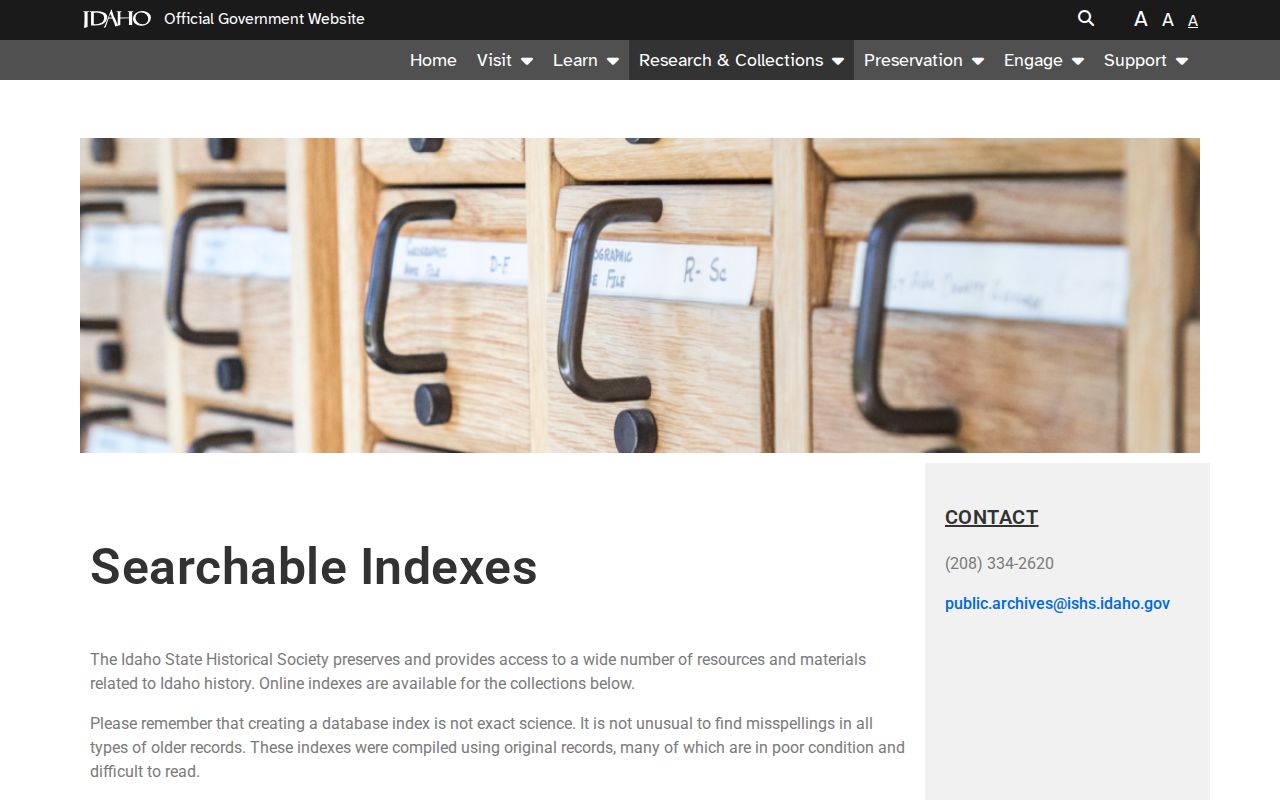
FamilySearch's Twin Falls County collection includes probate and death indexes as well as deeds. Its Sunset Memorial Park Cemetery collection spans 1937–1993, and the community-contributed Twin Falls City Cemetery search reported 8,757 people when inspected. These are leads, not substitutes for a certified record. The Idaho State Historical Society also provides biographical, naturalization, mothers' pension, and old-age pension indexes, with warnings about spelling variants and selected coverage.
The screenshot below comes from the Idaho State Historical Society searchable indexes used to extend Twin Falls previous residents research.
The Library of Congress Idaho vital-records guide points family historians toward the proper historical jurisdictions.
Keep Twin Falls Previous Residents Research Lawful
Owners are only one part of an address history. Dated directories and census records can expose boarders, relatives, and other household members, while an obituary or probate file can link an estate to later title activity. Restricted court filings, confidential vital records, and protected addresses still remain outside the public trail. Absence from an index is not proof that a person was absent.
House-history limit. Use past-resident records for genealogy, house history, heir research, or lawful personal curiosity, never to harass, threaten, or track a living person.
End with an evidence log: source, date, repository, page or instrument, exact transcription, and what the item does and does not prove. Previous residents of Twin Falls become clearer when every era gap stays on the page. A careful timeline can say who lived here before only when address, person, and date truly meet.