
Finding Residents Across Twin Falls
Start with the most exact fact you know. A street address belongs first in the Twin Falls County Parcel Map. A full name can be checked in Idaho iCourt, voter status tools, business filings, and unclaimed property. An old address or family name belongs in the library's directory and newspaper collections. These sources do not form one master residents directory. Each was made for a different public task, and each confirms a different part of identity or place.
Property records mainly name owners, not every person who lives at a parcel. Voter status is limited and does not reveal a ballot. Court results can distinguish people through a case number or filing history but omit sealed and restricted matters. Printed city directories may include adult householders, spouses, occupations, or addresses, yet their canvass could miss a household. Use two independent records when identity matters.
- Put a Twin Falls address or parcel number into the county parcel map, then note the owner, mailing address, legal description, and deed references.
- For a named person, check the official Idaho voter-status and iCourt searches using the fields each portal permits.
- Ask the County Clerk / Auditor / Recorder for current instruments or certified copies. No county-run public deed-index search was located.
- Move an older name or address to the Twin Falls Public Library's Idaho Room, digitized newspapers, and verified directory runs.
- Send a specific Idaho Public Records Act request to the city or county custodian when a non-exempt record is not published online.
Twin Falls Resident Record Keepers
Twin Falls County combines several roles in one elected Clerk. That office records instruments, serves as clerk of the district court and commissioners, and acts as chief elections officer. The Assessor, in a separate county office, lists and values taxable property and provides the address-driven parcel map. City records, including municipal deeds, easements, minutes, licenses, and permits, follow a different route through the Twin Falls City Clerk. A search works best when it goes to the office that created or keeps the record.
Twin Falls County Clerk / Recorder
630 Addison Ave W, 2nd Floor
Twin Falls, ID 83303
208-736-4004
Twin Falls County Assessor
630 Addison Ave W, Suite 1300
Twin Falls, ID 83303
208-736-4010
The Twin Falls County records gateway shows the county office structure and current notices.
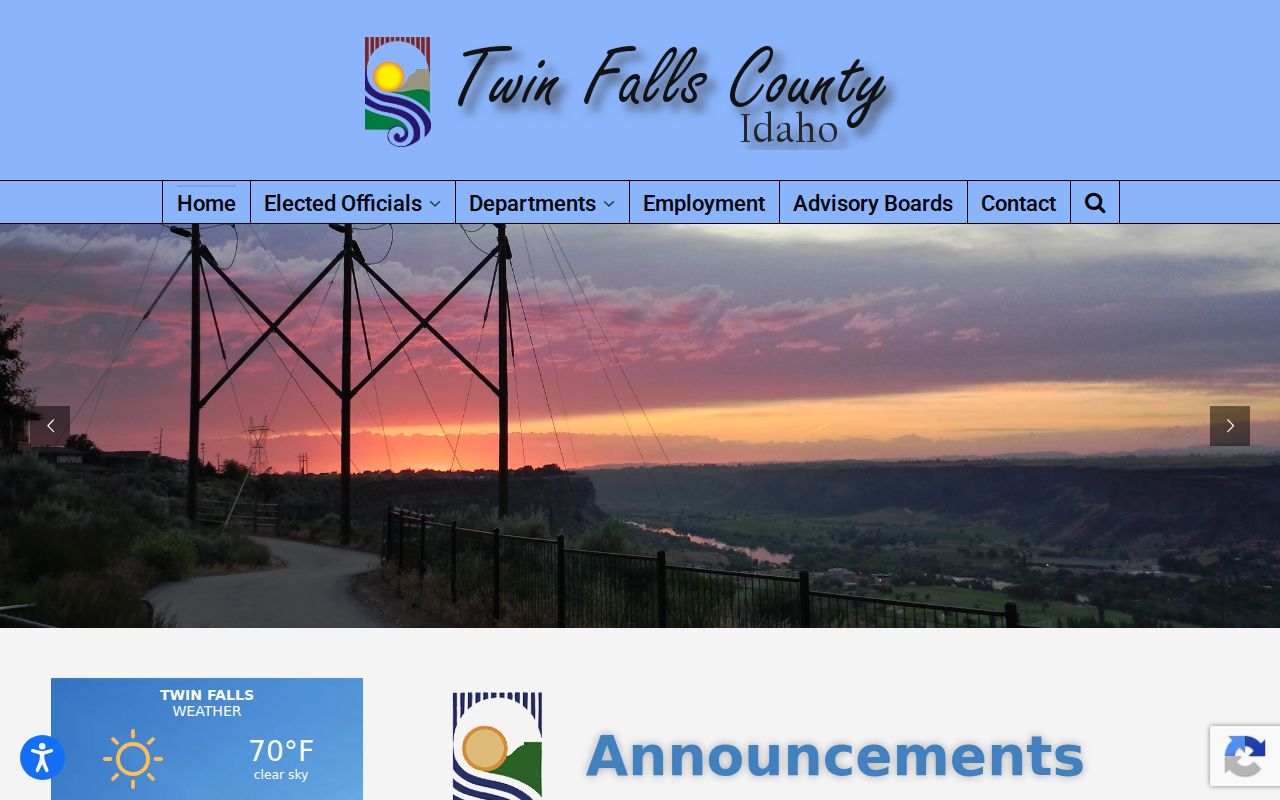
The gateway is a routing page, not a combined resident search, so select the department before sending a request.
Twin Falls Parcel Directory Fields
The county's ArcGIS parcel app searches a property address or parcel number. Owner name is not a search input. It appears after a parcel is selected, along with situs and mailing addresses, legal-description lines, deed references, acreage, value fields, and taxing districts. A situs address is the physical location. A mailing address is where the assessor sends correspondence, and it does not prove the owner lives at the property.
| Portal control | Input | What happens |
|---|---|---|
| Parcels / property address | Street address text | Searches all mapped parcels, with up to six suggestions |
| Find by parcel number | Parcel identifier | Selects the matching parcel and opens its popup |
| Map layers | Layer choice | Adds parcels, wells, soils, flood, imagery, and district context |
| Parcel popup | Selected result | Shows owner, address, legal, deed, value, and district fields |
For a whole road rather than one parcel, follow the complete Twin Falls street directory workflow. The map warns that its data are continually updated, supplied as is, and not meant for design or construction.
The popup's deed-reference fields bridge two systems that otherwise do not share a public search. Write down all displayed references and each legal-description line before contacting the Recorder. District fields can also explain why two nearby parcels fall into different school, fire, highway, or taxing areas. Acreage and value entries add context, but neither identifies every Twin Falls resident connected with the land.
No Online Twin Falls Deed Index
The current county pages do not expose a public grantor-grantee search. A grantor is the person transferring an interest; a grantee receives it. For a current or certified instrument, use the parcel popup's deed reference and legal description, then contact the County Clerk / Recorder or submit a signed, dated request to the proper custodian. The request clock starts when that custodian receives it.
The County Clerk / Recorder page identifies the office and its duties.
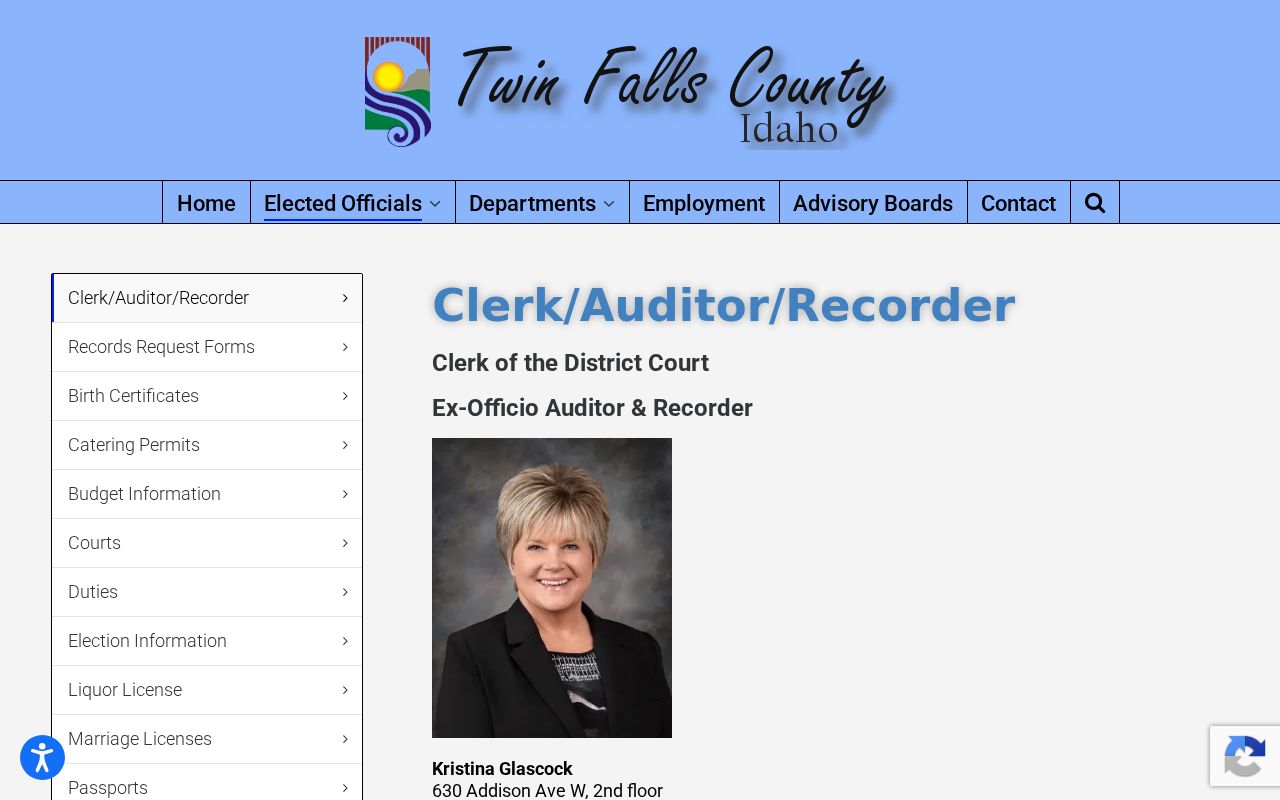
The screenshot confirms the official office route. It should not be mistaken for a live deed-name index.
For older work, FamilySearch's Idaho, Twin Falls County Records collection spans 1906 through 1988 across several record groups. Its listed coverage includes direct and reverse deed indexes from 1915 through 1974 and deed images from 1906 through 1941. Confirm a historical find with the Clerk when a reliable or certified copy is needed.
Twin Falls Records Request Routes
Idaho's Public Records Act is not a universal search box. The requester must identify the proper custodian and describe the record clearly. Twin Falls County requires a completed, signed, and dated request. Twin Falls City requires its own form for physical and electronic requests. Useful details include a street address, parcel number, case or instrument type, date range, and the kind of copy sought.
The county public-records request page is the fallback for county-held material that is not online.
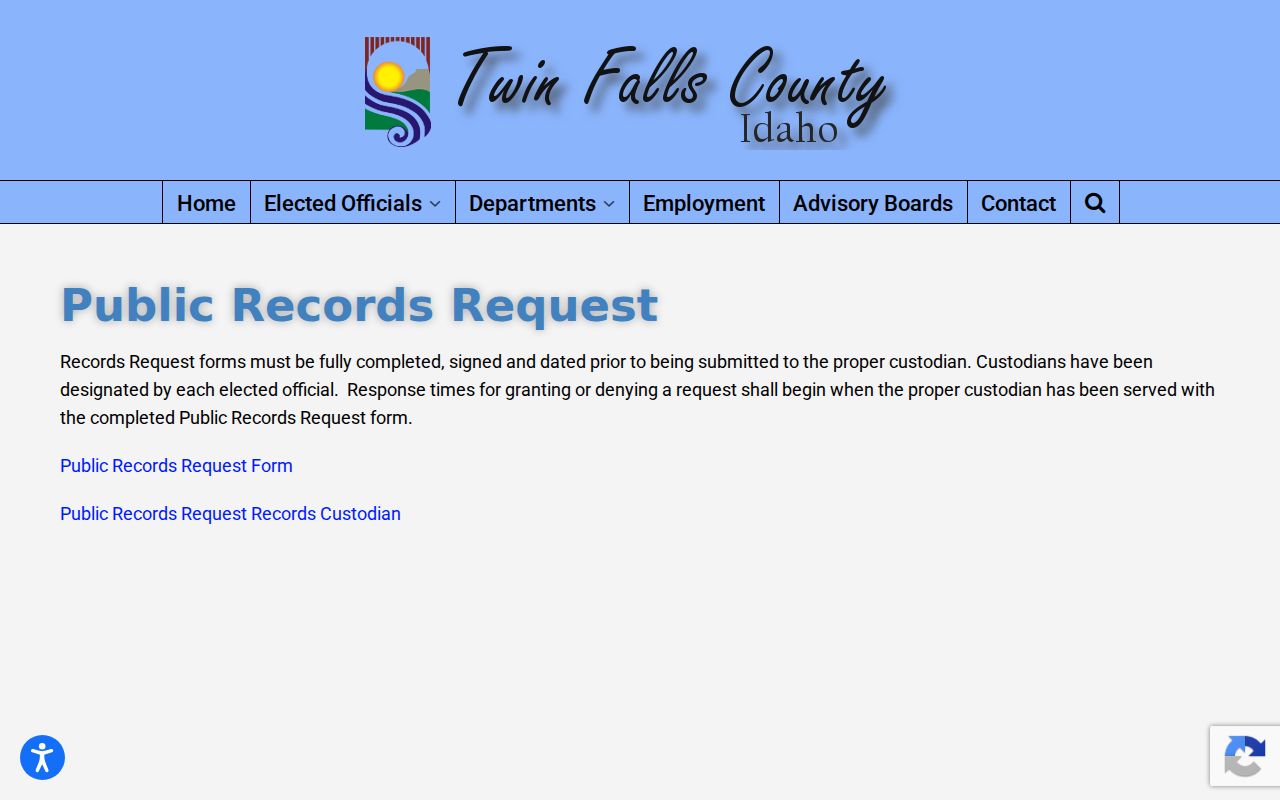
Its custodian rule matters: sending a broad demand to the wrong office delays the start of the response period.
The Twin Falls City records request page leads to the city's required form.
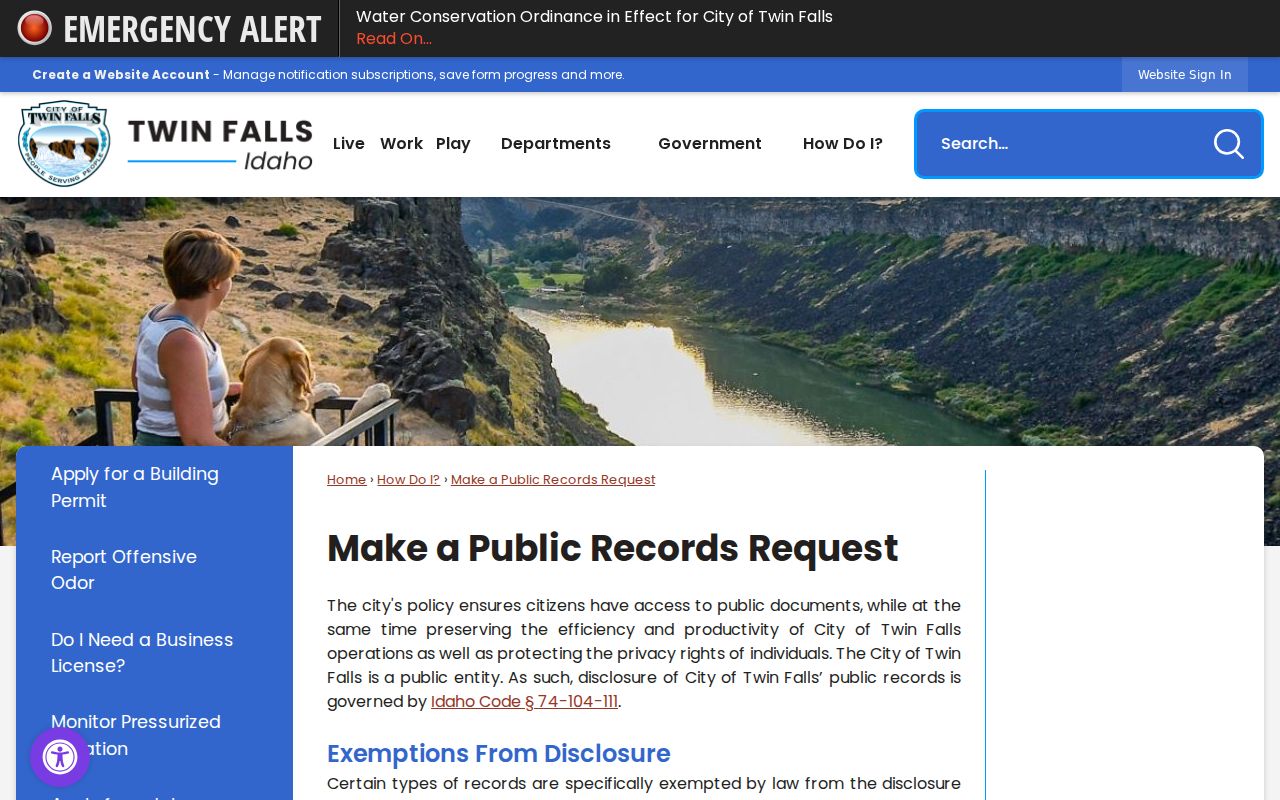
The city route applies to municipal contracts, minutes, permits, police records, and other non-exempt city material, not county deeds or court files.
For qualifying Idaho residents, the first two labor hours and first 100 pages are generally free under the state framework. Additional work may be charged at the lowest qualified employee or attorney rate, subject to statutory rules. Current guidance gives different response periods for residents and nonresidents. A denial should identify the exemption and appeal rights, so keep the request and response together.
Current Twin Falls Resident Rolls
Each active source lists only the people or parties tied to its public purpose. The Twin Falls residents directory becomes more reliable when the results are treated as partial rolls rather than a complete list of households.
| Official source | Whom it may identify | Keeper | Access route |
|---|---|---|---|
| Parcel map | Current owner shown after address search | County Assessor | Free ArcGIS map |
| Voter status and public file | Registered voters, with limited fields | County Elections / Idaho SOS | Status tool or certified file request |
| Recorded instruments | Parties to deeds and other filings | County Clerk / Recorder | Office or records request |
| iCourt | Public case parties | Idaho Judicial Branch | Smart Search, clerk, or kiosk |
| Business filings | Entities and registered agents | Idaho Secretary of State | Online Business Search |
None proves that a person currently sleeps at a given address. The assessor may show a nonresident owner, and a case record can be years old. A careful Twin Falls resident lookup checks dates, middle names, addresses, and a second source before drawing a conclusion.
Twin Falls iCourt Name Results
Idaho iCourt Smart Search is the main public name route for state cases serving Twin Falls. Search inputs include first, middle, and last name, business name, party type, case type, status, filing dates, and date of birth where the interface allows it. A hit can show party role, case number, court location, case type, status, file date, charges or claims, and docket events. A docket is the chronological list of filings and actions in a case.
The Idaho iCourt Smart Search supplies public case and party results.
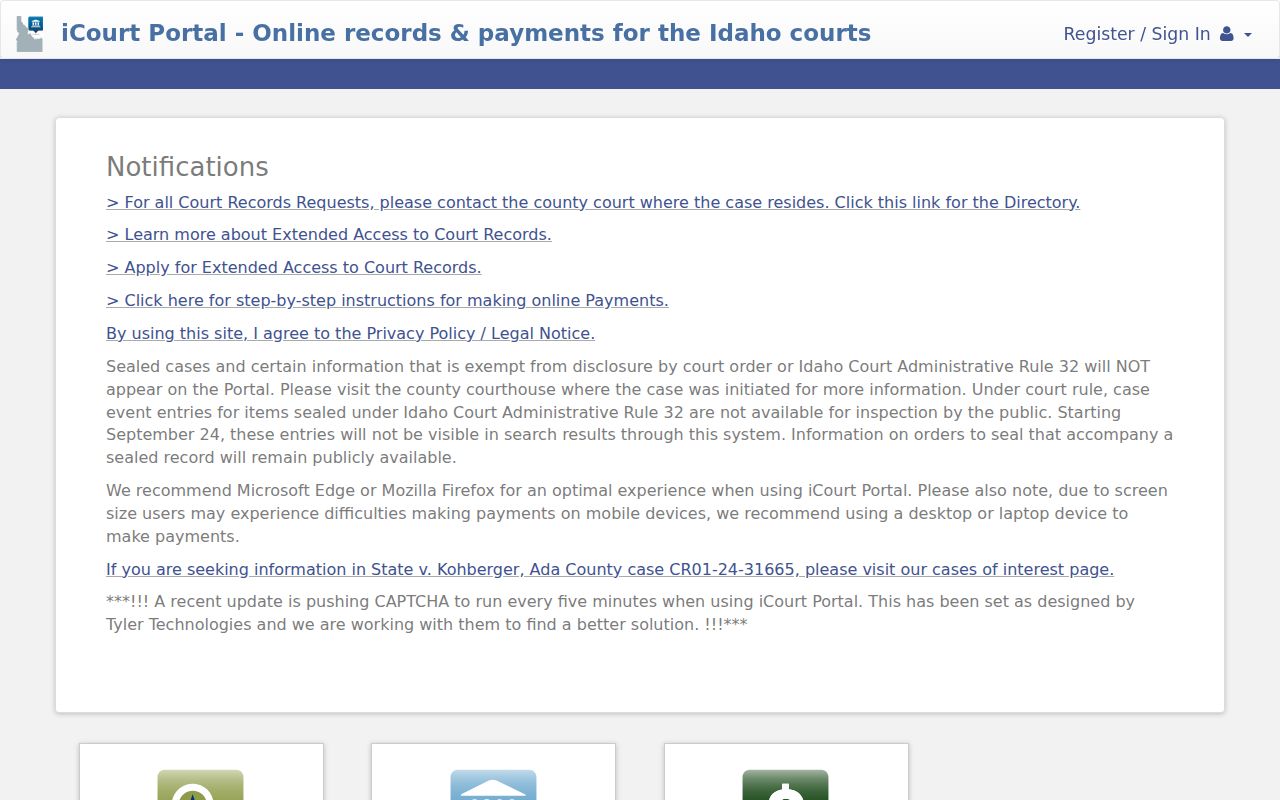
The result is an index lead, not necessarily the file itself. Sealed, juvenile, and other restricted material will be absent or limited, while copies and certifications remain clerk or courthouse routes.
Twin Falls City Records Gateway
The Twin Falls City Clerk keeps or administers contracts, deeds, easements, leases, minutes, ordinances, resolutions, licenses, and other municipal records. The office also assists with city elections and business-license forms. It does not publish a general resident-name database. Address-keyed building permits offer a separate trail through monthly reports and an ArcGIS dashboard, but a permit identifies a project, owner, or contractor field, not who occupied the site.
The Twin Falls City Clerk page lists the municipal record route.
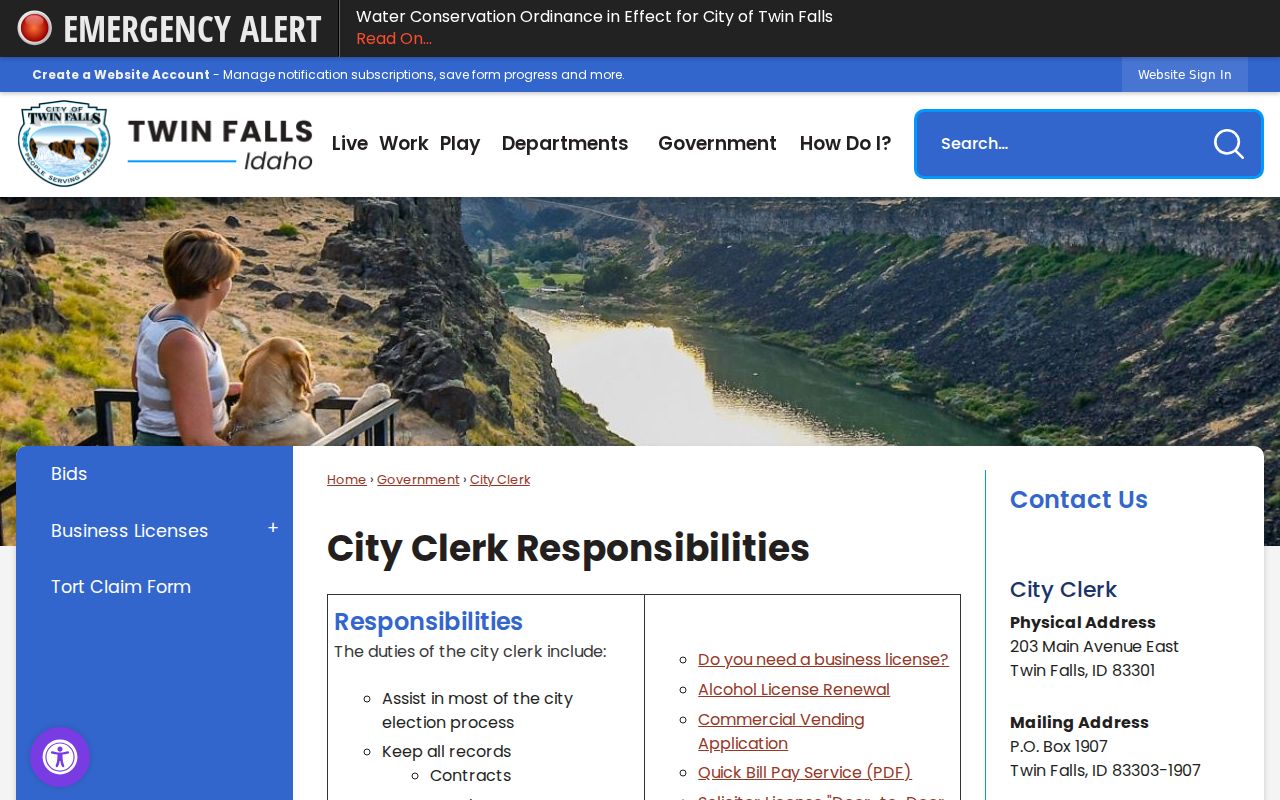
The office at 203 Main Avenue East is open weekdays from 8 a.m. to 5 p.m.; its PO Box 1907 is a mailing address, not the physical site.
Twin Falls Voter Record Limits
Idaho's voter-status tools let an individual check registration through official state channels. The county sample-ballot path uses a name and date of birth. Public voter-file requests are a separate process through the Secretary of State and can ask for selected report types, media, geographic scope, and date range. Public data can include a voter ID, name, residence and mailing address, county, precinct, legislative district, status, party, and limited participation history. It does not disclose how anyone voted or a full date of birth.
Eligible survivors may use Idaho's Address Confidentiality Program, also called Safe at Home. It provides a substitute mailing address, mail forwarding, and confidential voter treatment, so a normal address trail may be intentionally incomplete.
Twin Falls Business Name Clues
A personal name may appear in a public business filing even when the county rolls give no clear match. Idaho Business Search supports entity, registered-agent, filing, trademark, and certificate searches. A registered agent is the person or company designated to receive official legal papers for an entity. That role does not by itself prove ownership or residence.
The Idaho Business Search provides the statewide filing interface.

Compare an agent or entity result with its filing date and address, then return to the appropriate county or court custodian for the underlying record.
Unclaimed Property Finds Twin Falls Names
Idaho's official unclaimed-property system is a useful reconnecting tool for people, heirs, and estates. It searches by name or business, and it can narrow results with a city. A match means the state is holding property reported by an organization. It does not confirm a current home address. The claimant must follow the state's proof and claim process.
The Idaho Unclaimed Property search offers name, business, city, and advanced fields.
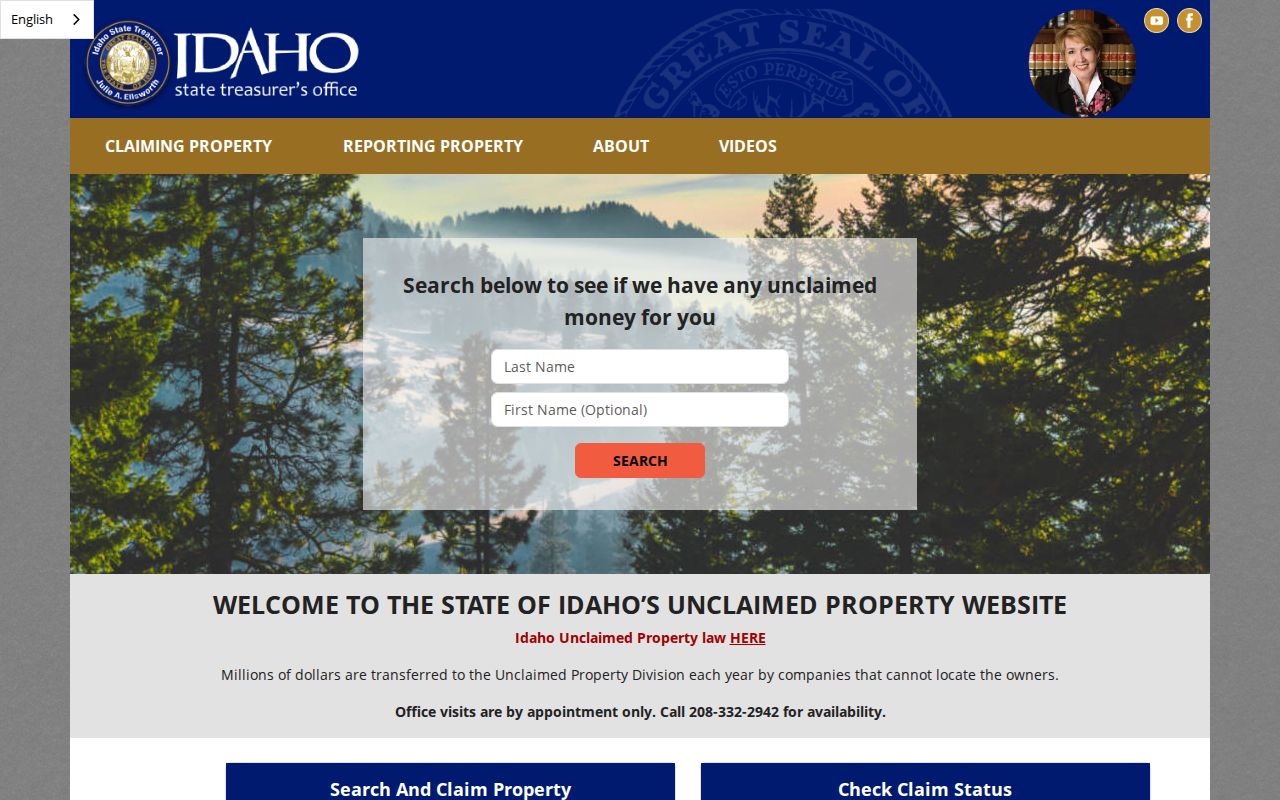
City filtering can separate a Twin Falls lead from the same name elsewhere, but older reported addresses and name variants still call for a second record.
Official Twin Falls Rolls Compared
Official records are built around a government act such as assessing land, filing a case, recording an instrument, or registering a voter. Commercial people-finder products combine data from many sources and may lag behind corrections. They can be convenient clues, but their result is not a certified public record.
| Choice | Strong point | Main limit |
|---|---|---|
| Official portal | Clear custodian and record purpose | Usually covers one record type |
| Office or signed request | Can obtain non-exempt files and certified copies | Needs a precise request and may involve fees |
| Commercial category | Combines broad leads | Can be stale, mismatched, or unsupported |
- Roll
- A list kept for an official task, such as assessment or voting.
- Index
- A finding aid that points to a record; it may not contain the full document.
- Parcel
- A legally described unit of land identified by the assessor.
- Criss-cross directory
- A directory arranged by address or phone number instead of surname.
Historical Twin Falls Resident Directories
The Twin Falls Public Library's Idaho Room holds local history and genealogy material, including Polk's city directories, newspapers from 1904 forward on microfilm, photos, oral history, and local ephemera. The library describes about 25,000 Idaho Room items and more than 5,000 historical photos. Its digital collections add more than 30,000 images tied to Twin Falls and the Magic Valley. Staff research is available by email or form for a stated $5 per item.
Verified outside inventories fill gaps in the library's online description. The University of Idaho lists Twin Falls telephone and business directory runs, while the Idaho State Historical Society identifies directory reels and later regional years. An address can be followed through surname listings and later criss-cross volumes, then paired with census, obituary, cemetery, and newspaper evidence. The detailed year-by-year shelf and abbreviation method belong in the Twin Falls city directory collections.
The city was platted in 1904 and Twin Falls County formed in 1907. That short gap matters: the earliest local trail may sit in newspapers, land records, and census material before a stable run of city directories exists. Original Townsite research uses 1910 and 1916 directories with census and property evidence, showing why one source should never carry the whole conclusion.